
How The Empowering Readers OC Program Works
Structured Sessions for Maximum Impact
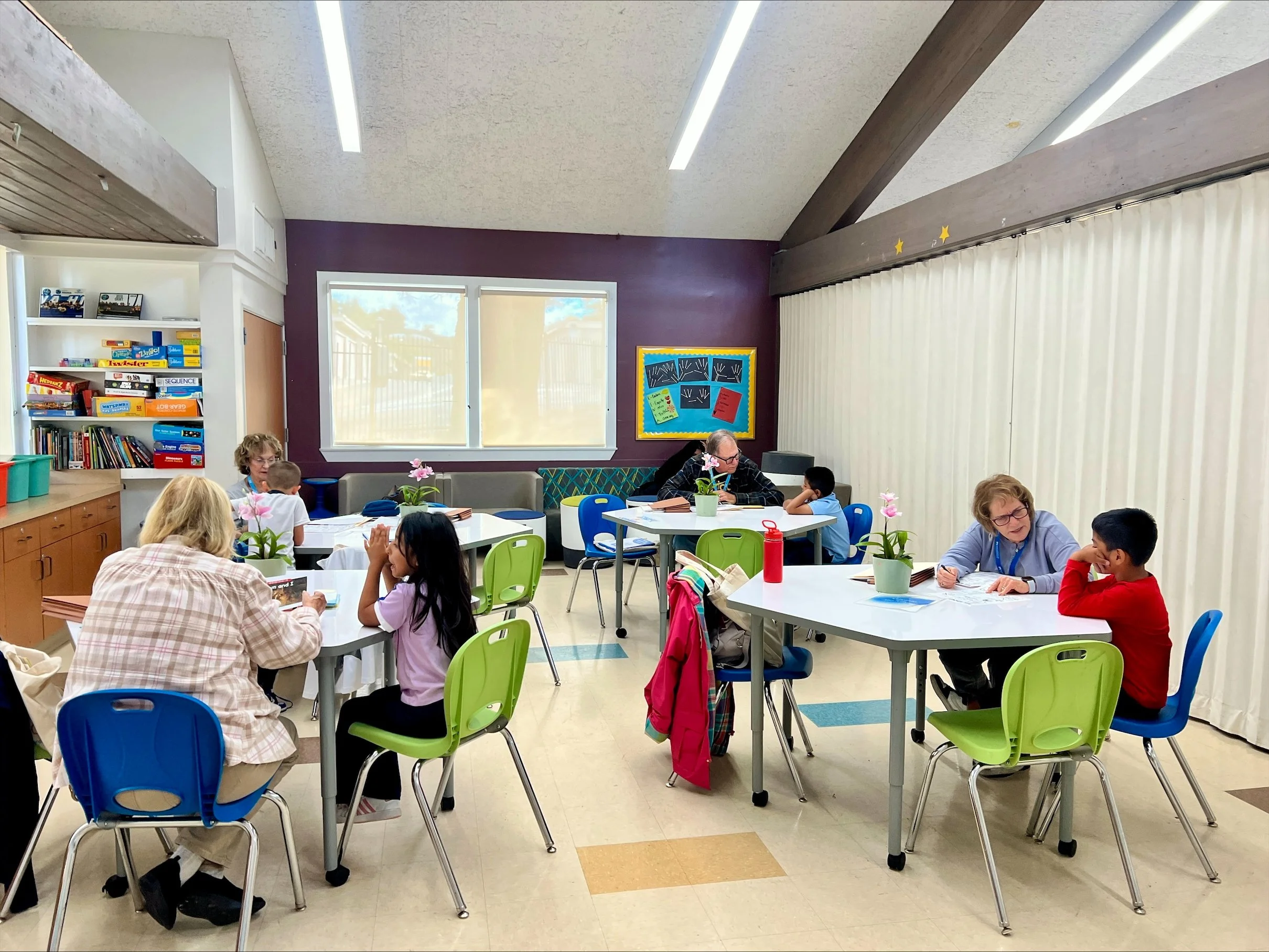
Our Empowering Readers OC program delivers consistent, research-based literacy support through carefully structured 30-minute sessions that maximize student learning and engagement.
Session Timeline & Components
Twice Weekly Sessions: 1st-5th grade students meet with the same dedicated volunteer tutor two times per week from October through May, ensuring the student receives consistent support and is able to cultivate a personal relationship with their tutor mentor throughout the academic year.
30-Minute Structure:
Opening (2 minutes): Building connection and setting goals
Page Preview (2 minutes): Introducing vocabulary and text features
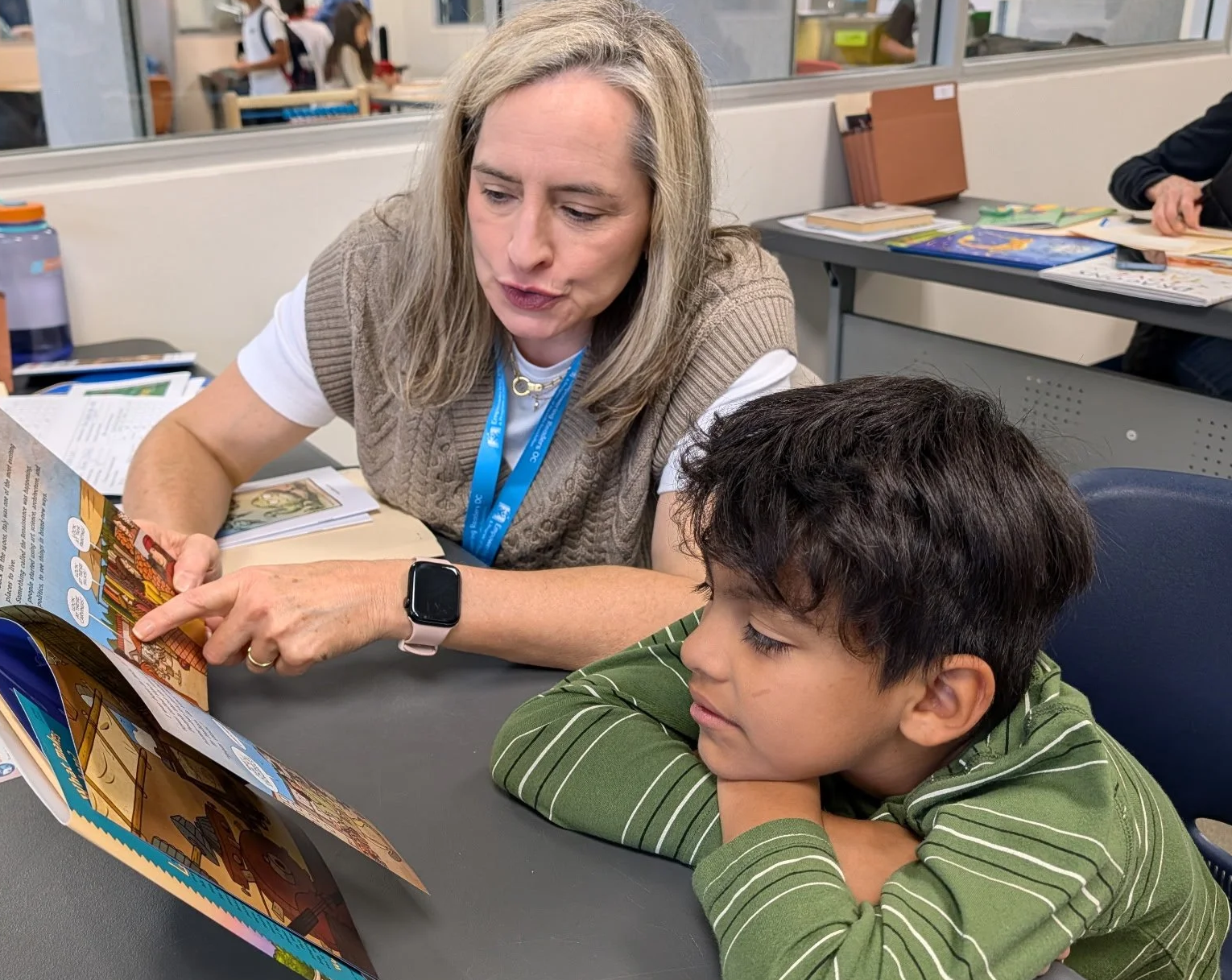
Fluency Games (15 minutes): Repeated guided reading practice using proven techniques like Echo Reading, My Turn-Your Turn, and Dramatic Reading
Independent Reading (2 minutes): Student demonstrates fluency gains
Comprehension Check (2 minutes): Ensuring understanding through open-ended questions
Read Aloud (5 minutes): Volunteer models fluent reading with engaging fiction
Closing (2 minutes): Celebrating achievements and building mentoring relationships
Research-Based Methodology
Every component follows Science of Reading principles, emphasizing repeated reading with guidance and modeling fluent reading - the two most effective strategies for developing reading fluency. Students practice the same text multiple times through engaging games, building accuracy, speed, and expression while developing confidence.
This structured approach ensures every minute counts toward measurable literacy gains, helping students develop the skills and confidence needed to succeed academically and beyond.
Our Research-Based Approach
Parentis Foundation's
Empowering Readers OC program is grounded in the Science of Reading, a comprehensive body of research conducted over fifty years by brain researchers, psychologists, and neurologists.
This evidence-based approach focuses on how students actually process information to make meaning from text.
Essential Components of the science of reading
Our program addresses the elements proven necessary for reading success:
Fluency: Reading text accurately, automatically, and with expression so students can focus on comprehension rather than decoding.
Vocabulary: Building knowledge of word meanings that directly impacts reading comprehension.
Comprehension: The goal of reading - understanding and making meaning from text.
By systematically addressing these components through structured, one-on-one tutoring sessions, our volunteer tutors help students develop the foundational skills necessary to become confident, proficient readers who can break the cycle of poverty through literacy.
Measuring Progress with Precision
We use DIBELS (Dynamic Indicators of Basic Early Literacy Skills) assessments to track each student's reading development with scientific accuracy. These research-validated tools provide quick, reliable snapshots of student progress in key literacy areas.
How DIBELS Works
Frequency: Students are assessed three times per year during benchmark periods (fall, winter, spring), with additional progress monitoring for students receiving intensive support.
Efficiency: Each assessment takes just 1-2 minutes, allowing us to gather valuable data without disrupting valuable instruction time.
Data-Driven Decisions: DIBELS results help our literacy specialists and volunteer tutors identify specific areas where students need support, select appropriate reading materials, and adjust instruction to meet individual needs.
Proven Impact: Students who receive targeted intervention based on DIBELS data show significant improvement in reading fluency and comprehension, with 60% of our students demonstrating measurable gains in critical literacy skills.